
Intervention Preparation: Why the Intervention Starts Before the Intervention

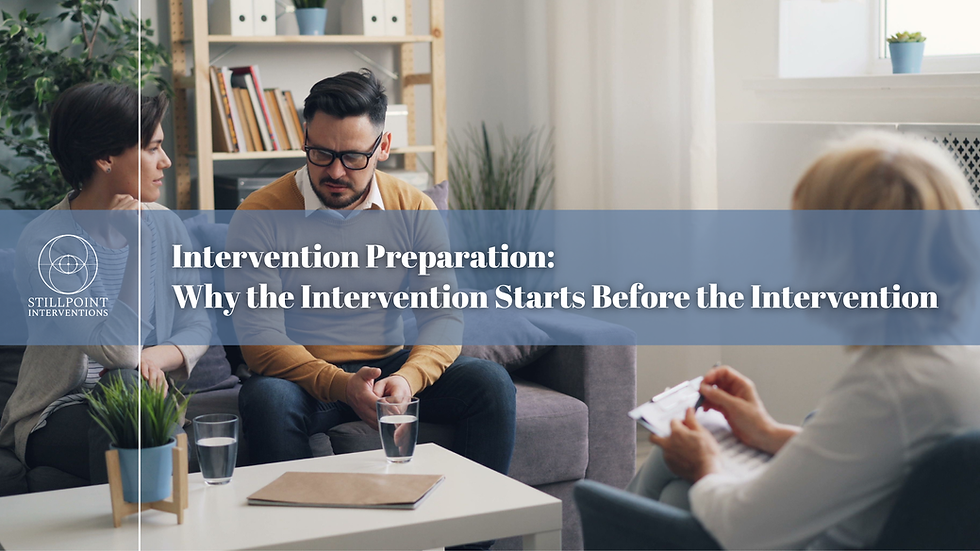
When families think about an intervention, they often picture a single moment: everyone gathers together, the conversation happens, a loved one agrees to get help, and everything changes.
In reality, that moment is only one small piece of the process.
The truth is that successful intervention preparation often begins long before anyone sits down for the intervention itself. What happens beforehand frequently determines whether the intervention has a chance to succeed.
Why Intervention Preparation Matters
Many families are surprised to learn how much work happens before an intervention ever takes place. They assume the intervention itself is the strategy. It isn't. The intervention is the implementation of the strategy.
The real work happens during intervention preparation, when families begin understanding the dynamics that have developed, identifying obstacles, and creating a unified plan moving forward.
Without preparation, even the most heartfelt intervention can struggle to create lasting change.
The Family Work That Happens Before an Intervention
One of the biggest mistakes families make is focusing entirely on their loved one.
How do we get through to them?
What should we say?
How will they react?
Those questions matter, but they often overlook something equally important: the family system.
Many families have spent months—or even years—reacting to addiction. They've adjusted, adapted, protected, accommodated, and tried to keep things together. Those patterns don't disappear simply because an intervention is scheduled.
This is why intervention preparation often starts with the family, not the individual.
Many families begin recognizing some of the same patterns discussed in Trying to Control Addiction: Why It Keeps Families Stuck and Consequences in Addiction: Why They Matter for Change. Before real change can happen, everyone has to understand the role they have been playing in the existing dynamic.
Family Alignment Creates Stronger Interventions
One of the primary goals of intervention preparation is creating alignment.
When family members have different expectations, different boundaries, or different levels of commitment, the intervention can become confusing and ineffective. Alignment doesn't mean everyone agrees on everything. It means everyone understands the plan and is committed to moving in the same direction.
This is often where families begin learning how to set boundaries in addiction. Clear boundaries create consistency, accountability, and a stronger foundation for whatever comes next.
Communication Starts Before the Conversation
One of the biggest misconceptions about interventions is that success depends on finding the perfect words.
It doesn't.
Families who have explored How to Talk to Your Addicted Loved One: Without Pushing Them Away often discover that communication becomes more effective when it is supported by preparation, structure, and consistency.
The intervention itself is rarely about delivering a perfect speech. It's about creating an environment where change becomes possible.
Why Waiting Doesn't Create Readiness
Families spend a lot of time wondering if they should wait a little longer.
Maybe things will improve.
Maybe this was a wake-up call.
Maybe next month will be different.
These questions are understandable, but timing alone doesn't create readiness.
Many families who have read When "Wait and See" Becomes Dangerous: 5 Signs It's Time for Professional Intervention already understand that waiting often creates more risk than clarity. The focus shouldn't be finding the perfect moment. The focus should be preparing for action when the time comes.
What Families Don't Realize About Intervention Success
Many people believe intervention success is determined by what happens during the intervention itself.
In reality, some of the most important factors are established beforehand.
Family alignment.
Clear boundaries.
Consistent expectations.
A realistic treatment plan.
An understanding of what happens after treatment begins.
This is one reason why DIY Interventions: Why Families Often Struggle Without Professional Guidance can be so difficult. Without preparation, families are often trying to navigate a highly emotional situation without a roadmap.
Intervention Preparation Doesn't End With Treatment
One of the biggest misconceptions about interventions is that the work ends once someone agrees to treatment.
The reality is that treatment is often just the next step.
Families who understand Aftercare After Intervention: Why an Intervention Is Only Step One recognize that long-term success requires planning beyond admission. Recovery is a process, not an event, and intervention preparation is often the first step in building that process.
You Don't Have to Figure It Out Alone
Families facing addiction often feel like they need to have all the answers before taking action.
You don't.
At Stillpoint Interventions, intervention preparation is a collaborative process that helps families move from uncertainty to clarity. Support doesn't start with the intervention, and it doesn't end when treatment begins.
Finding Professional Intervention Support
Families navigating addiction often benefit from experienced guidance. Working with a professional interventionist in Dallas can help create the structure, alignment, and preparation needed to support meaningful change.


Comments